Edcafe turns a topic or a teacher’s own materials into quizzes, chatbots, flashcards, slides and Mini Apps, then collects student work in one place. Its free plan has unlimited AI generations; Pro is $7.99 a month billed annually. We checked its pricing, privacy policy and evidence.
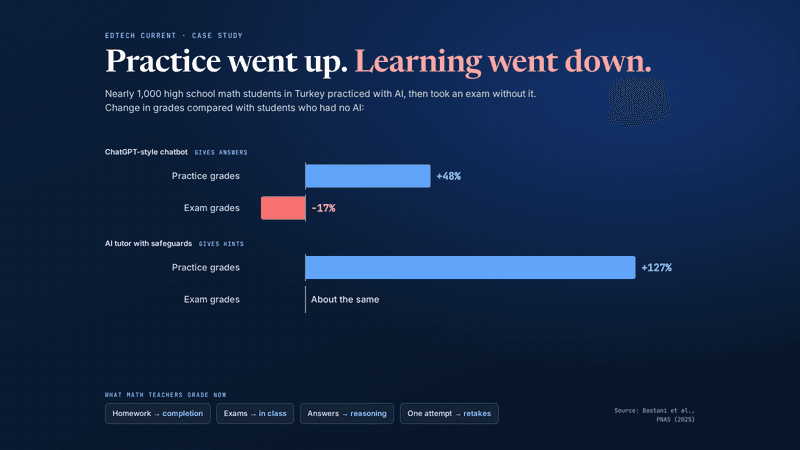
AI can solve most homework problems, so a correct answer no longer shows who learned the math. Here is how a Berkeley mathematician, a California high school teacher, a math educator’s 80/20 policy and Columbia’s math department are changing what they grade.
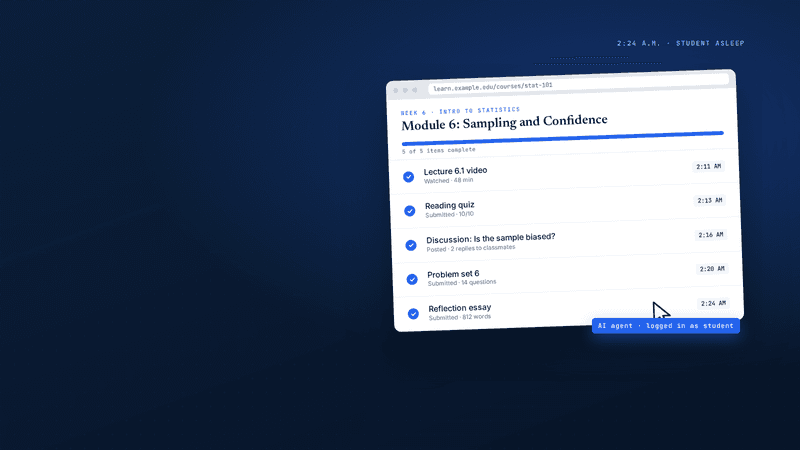
An AI agent called Einstein promised to log into Canvas, watch lectures and submit homework while students slept. It was taken down within days, but the tools behind it are still available, and colleges are rethinking online courses.
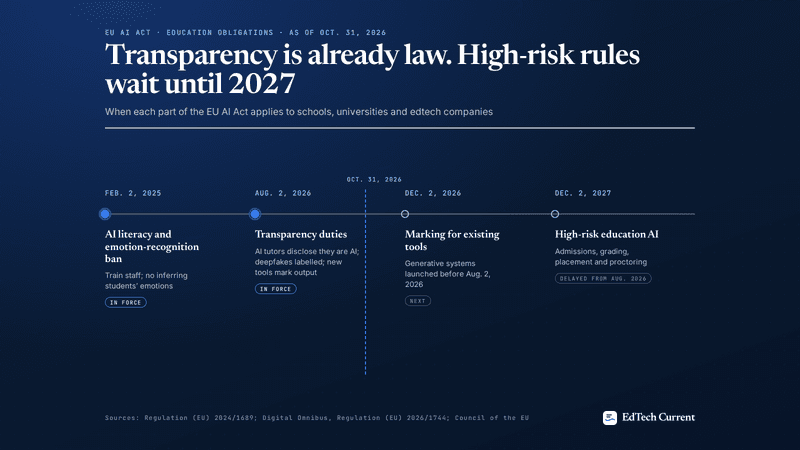
Since Aug. 2, 2026, AI tutors in the EU must say they are AI, generative tools must mark their output, and schools must label deepfakes. Here is what applies now, and what can wait until 2027.
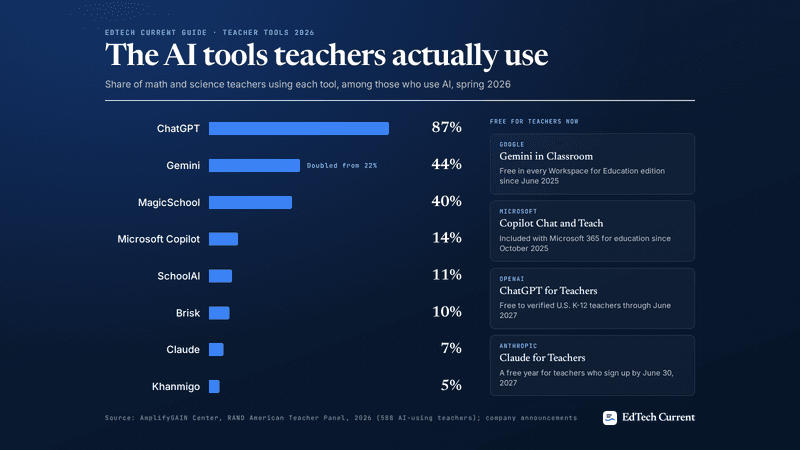
Teachers still do most of their work in Google Classroom, Canvas and a few quiz games, and ChatGPT, Gemini and MagicSchool lead AI use. We compared the tools on cost, evidence, privacy ratings and accessibility.
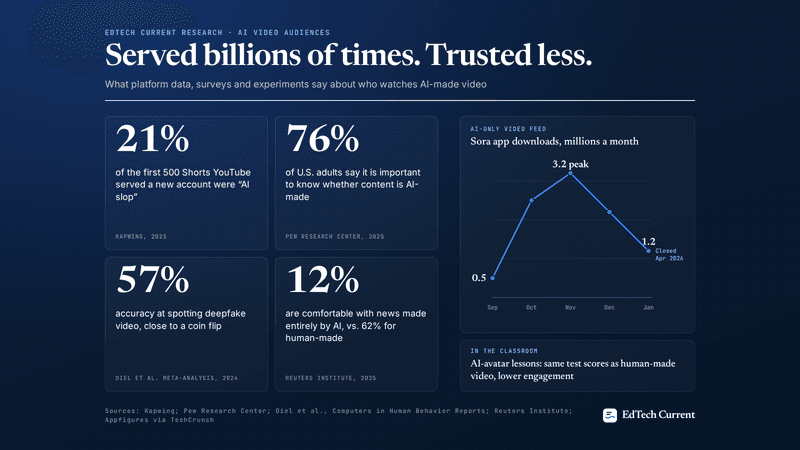
AI-only YouTube channels draw billions of views, but feeds made only of AI video faded fast. Labels cut trust, and students taught by AI avatars score about the same but engage less.
Eight states filed coordinated lawsuits accusing OpenAI of designing ChatGPT to foster dependency and misleading parents about its safety, the first action of its kind against an AI company. OpenAI says it has industry-leading protections.
Common Sense Media says ChatGPT for Teens gives parents false confidence: alerts didn’t reach parents in new accounts, and one in four crisis referrals were missed. OpenAI says the testing was flawed.
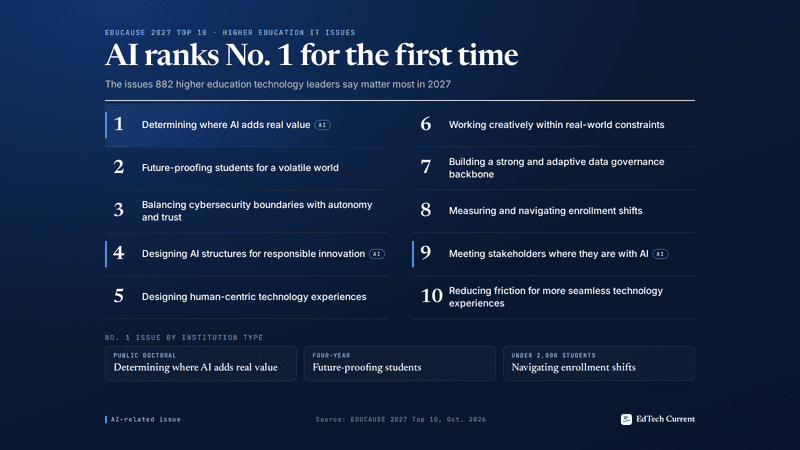
For the first time, an AI issue leads EDUCAUSE’s annual Top 10. The 2027 list moves campuses from experimenting with AI to proving its value, with accessibility, data governance and enrollment close behind.
Fluent answers feel like understanding. Feeling like we understand makes us lean on the tool more, and leaning on it more leaves us understanding less. Schools need to break that loop before it closes.